Tracing Bingo's Mathematical Roots Through Probability Models in 16th-Century Italian Lotteries and Their Echoes in Today's Digital Draw Systems
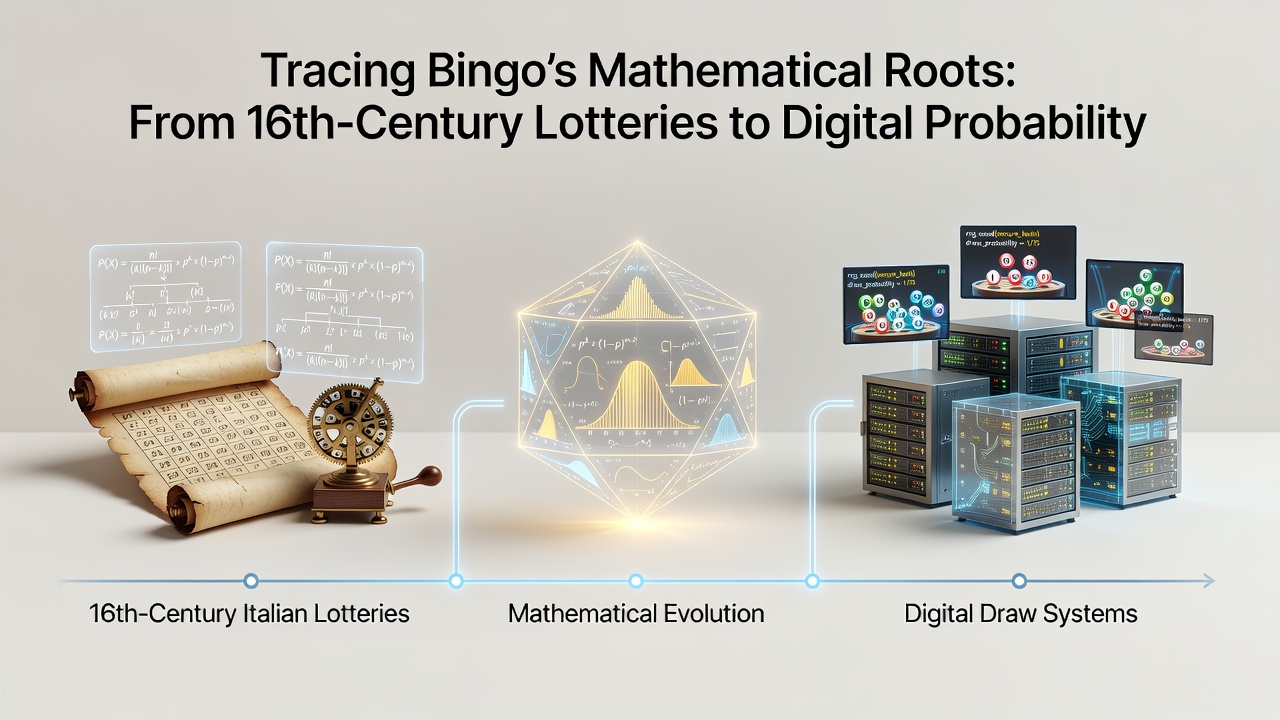
Italian lotteries from the 1530s established foundational structures that later shaped bingo, where numbered draws and player selections created early frameworks for chance-based games, and observers note that these systems prompted initial attempts to quantify outcomes through basic counting methods rather than pure intuition. Genoa's state lottery, introduced around 1530, required participants to select numbers from a pool, often 90 total, while Venice and other cities adopted similar formats that spread across the peninsula, and researchers trace how these lotteries operated on fixed draw mechanisms that relied on random selection from physical containers.
Early Probability Concepts in Renaissance Italy
Mathematicians in 16th-century Italy examined these lotteries to identify patterns in repeated draws, although formal probability theory developed more fully in subsequent decades, and data from surviving records shows participants and administrators alike tracked frequencies of specific number combinations across multiple events. Gerolamo Cardano produced writings on games of chance during this period, including observations about dice and card probabilities that paralleled lottery mechanics, while his work "Liber de Ludo Aleae" outlined ratios and expected values that later influenced broader mathematical approaches to random events. These efforts marked a shift where people began documenting results systematically, and evidence suggests such records helped refine expectations for future draws without guaranteeing predictions.
One study revealed connections between these Italian practices and emerging combinatorial ideas, where selecting five or six numbers from ninety created vast possibility spaces that defied simple enumeration, and historians have documented how lottery operators adjusted prize structures based on observed participation rates and payout frequencies. Although complete mathematical models remained limited by computational tools of the era, the data collected from thousands of draws provided raw material for pattern recognition that extended beyond anecdotal experience.
Transition From Lotteries to Structured Bingo Variants
Bingo emerged as a variant in the 18th and 19th centuries when French and British adaptations simplified Italian lottery formats into grid-based games with called numbers, yet the underlying probability principles carried forward intact, and analysts observe that each number retained equal selection likelihood regardless of game presentation. The game reached North America by the early 20th century through traveling carnivals and church events, where operators used similar draw methods, and records indicate that bingo cards featured rows and columns designed around combinatorial arrangements that mirrored earlier lottery ticket structures.
Modern Digital Systems and Inherited Models
Today's digital draw systems replicate these historical probability foundations through random number generators that ensure uniform distribution across number pools, and regulatory frameworks in multiple jurisdictions require certification processes that verify statistical fairness equivalent to physical draws. Canadian gaming authorities, for instance, oversee online bingo platforms with testing protocols that confirm each draw maintains independence from previous results, while Australian state commissions apply comparable standards to licensed operators. These requirements echo 16th-century efforts to maintain draw integrity, although contemporary systems achieve consistency through algorithmic verification rather than mechanical mixing.
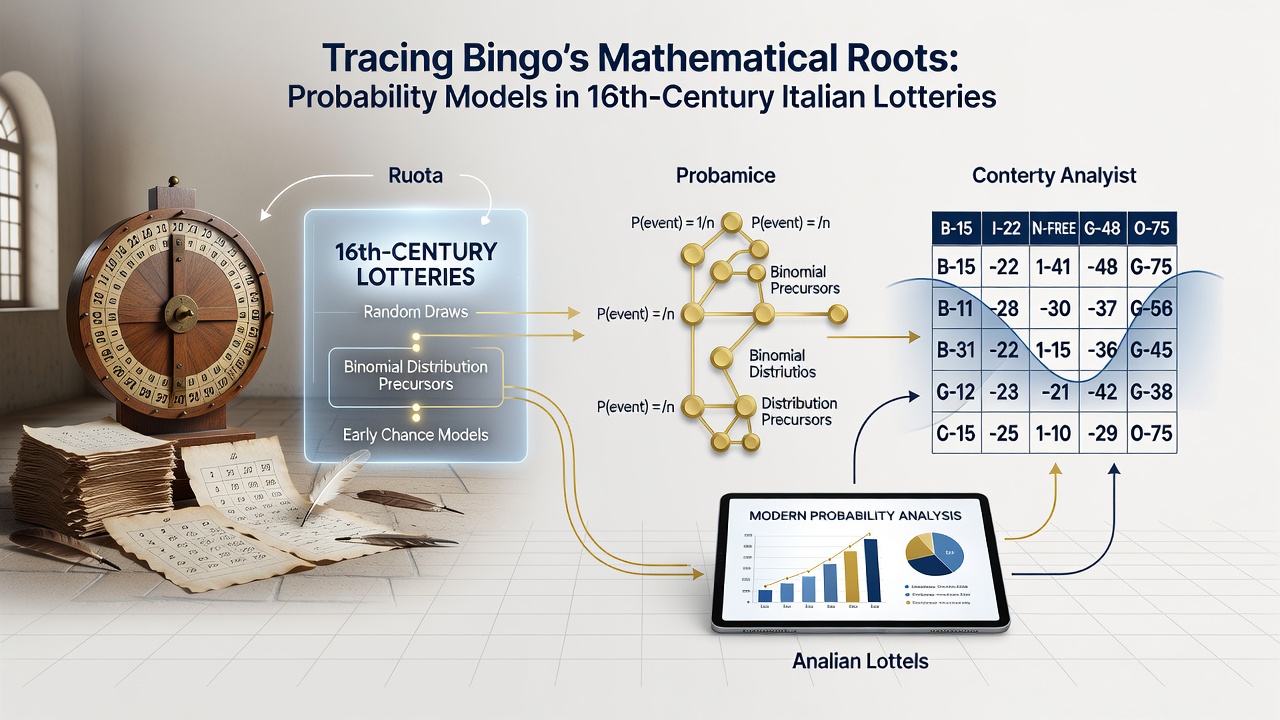
Research indicates that RNG implementations in current platforms calculate odds using the same combinatorial foundations established centuries ago, where a 75-ball or 90-ball game presents fixed probabilities for any given pattern to complete on each card. Industry reports from European gaming associations highlight how digital systems process millions of draws annually while preserving the equal-likelihood principle that defined early Italian lotteries, and figures reveal consistent payout ratios across large sample sizes that align with theoretical expectations. What's interesting is how server-based architectures allow real-time auditing of draw sequences, a capability absent from historical manual methods yet directly descended from the same need for verifiable randomness.
Statistical Echoes in Current Platforms
Operators in 2026 continue to publish aggregated draw data that demonstrates adherence to probability models refined since the Renaissance period, and one analysis from a North American research institution compared digital bingo outcomes against historical lottery records to identify persistent distribution patterns. These comparisons show that deviations remain within expected statistical margins, confirming that algorithmic advances have not altered core mathematical relationships but rather accelerated their application at scale. People who've examined these systems note that progressive jackpots and bonus rounds incorporate layered probability calculations, each building on independent event modeling that originated with simple lottery number selections.
University studies on gaming mathematics further document how digital bingo platforms integrate player tracking with probability adjustments for game variants, although base odds stay constant across sessions, and data from multiple regions indicates stable engagement metrics tied to transparent odds disclosures. The reality is that regulatory testing bodies across the EU and elsewhere mandate periodic RNG audits that reference historical probability benchmarks, ensuring continuity between 16th-century practices and present-day implementations without deviation in fundamental principles.
Conclusion
Tracing these mathematical threads reveals direct lineage from Italian lottery structures to contemporary digital bingo environments, where probability models developed through centuries of observation continue to govern fair play standards. Government agencies and academic researchers maintain documentation that links early combinatorial observations to today's certified systems, and the continuity demonstrates how foundational concepts endure despite technological evolution. Observers note sustained relevance of these models as platforms expand globally while preserving statistical integrity established long ago.