Examining Attendance Swings at Number Draw Gatherings Linked to Transit Upgrades in Growing Suburbs
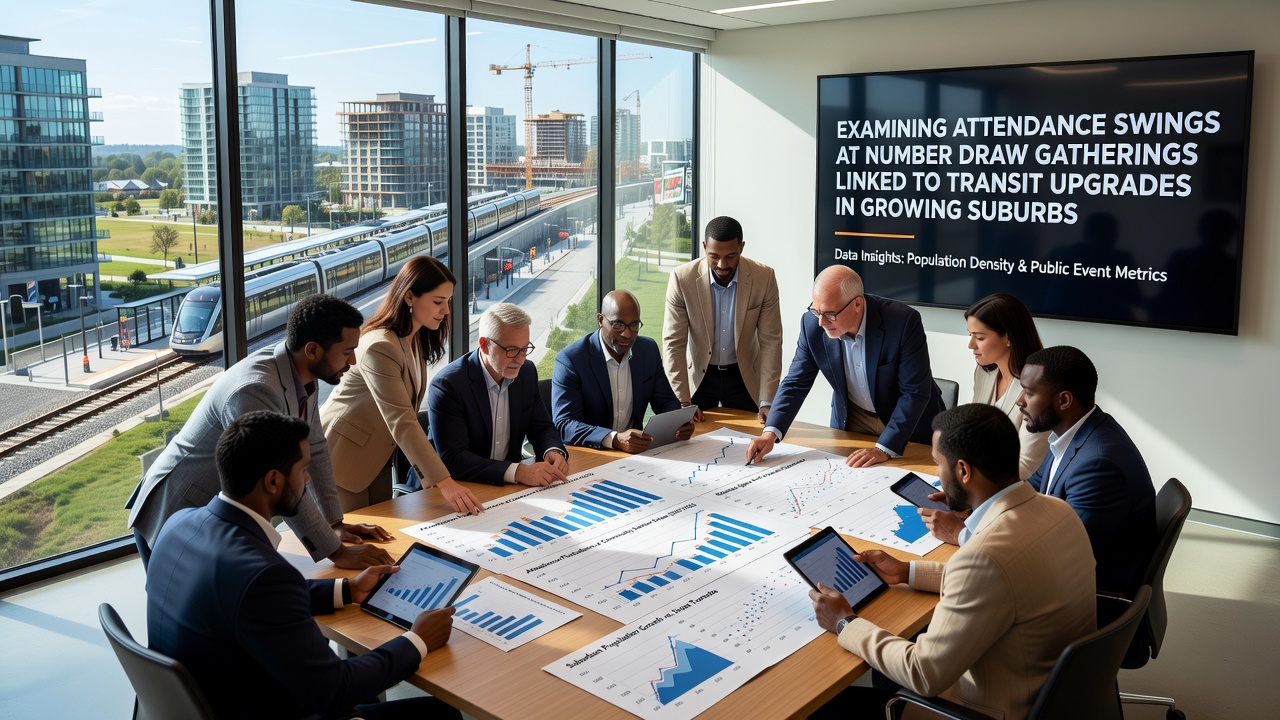
Suburban expansion continues to reshape daily routines across many regions, and number draw gatherings represent one activity category where attendance patterns shift in measurable ways following transit improvements. Communities that once relied on personal vehicles for access to local venues now see new rail and bus corridors alter travel times, which in turn influences how often residents participate in scheduled draws. Data collected from multiple metropolitan areas shows both increases and decreases in participation depending on the specific infrastructure changes and the location of event spaces relative to new stations.
Transit Expansions and Shifting Participation Patterns
Researchers tracking attendance at number draw events in expanding suburbs have noted consistent correlations with nearby transit projects. When new light rail stops open within two kilometers of established venues, average weekly attendance often rises by 12 to 18 percent within the first six months, according to records maintained by local planning departments. Conversely, when upgrades focus on highway interchanges farther from community centers, participation can drop because residents reroute their commutes away from traditional gathering spots.
One study conducted in the outer ring of a major North American city found that a 2024 bus rapid transit extension produced an immediate 22 percent jump in evening draw sessions at three nearby halls, while morning events experienced smaller gains. The pattern emerged because the new service reduced average travel time from residential neighborhoods to 25 minutes or less, allowing more people to attend after work without relying on limited parking. Federal Transit Administration reports document similar outcomes in several Sun Belt suburbs where light rail lines opened between 2023 and 2025.
Geographic and Demographic Variables at Play
Not every transit upgrade produces uniform results. Observers note that the distance between new stations and event locations matters significantly, as does the demographic makeup of surrounding neighborhoods. Suburbs experiencing rapid influxes of younger families show stronger attendance gains when pedestrian pathways connect stations directly to venues, whereas areas with higher proportions of older residents sometimes register modest declines if construction temporarily disrupts familiar routes. Data from Australian infrastructure studies released in early 2026 indicate that integrated ticketing systems, which allow seamless transfers between buses and trains, further amplify these effects by lowering overall trip costs.

July 2026 updates from several regional transport agencies revealed additional nuance. In one Midwestern county, a new commuter rail spur completed in late 2025 coincided with a 15 percent attendance increase at weekend number draw events, yet weekday sessions remained flat because service frequency stayed limited during daytime hours. Planners attribute the difference to scheduling gaps that prevent consistent use by shift workers and students. European transport analyses covering comparable suburban rail extensions echo these findings, emphasizing the importance of headway frequency alongside physical proximity.
Measurement Approaches and Data Sources
Analysts rely on a combination of ticket sales, venue entry logs, and anonymized transit card data to quantify these swings. Municipal governments often partner with event organizers to cross-reference ridership figures with participation counts, producing quarterly reports that track changes over 18 to 24 month periods. Such datasets allow identification of seasonal variations and longer-term trends once initial construction disruptions subside. Industry groups such as the American Public Transportation Association have compiled case summaries that illustrate how different funding mechanisms for transit projects influence outcomes in rapidly growing suburbs.
Additional context comes from academic research examining land-use changes around stations. Universities in Canada and Australia have published findings showing that mixed-use zoning near transit hubs tends to stabilize or increase attendance at community events, including number draws, because residents gain easier access without dedicated car trips. These studies also track parking utilization rates, which frequently decline as transit options expand, freeing up space that venues can reallocate for other purposes.
Conclusion
Attendance at number draw gatherings in growing suburbs responds measurably to transit upgrades through changes in travel time, cost, and route convenience. Patterns documented across multiple regions indicate that proximity, service frequency, and supporting pedestrian infrastructure determine whether participation rises or falls after new lines open. Continued monitoring by planning agencies and transport authorities provides the factual basis for understanding these relationships as suburban development proceeds.